Multiple Choice
Identify the
choice that best completes the statement or answers the question.
|
|
|
1.
|
More secure
|
|
|
2.
|
Wireless
|
|
|
3.
|
This can best be defined as the software that allows the computer to talk to the
network.
a. | Protocols | b. | Transmission media | c. | Control
panels | d. | Network operating system |
|
|
|
4.
|
This part of the network defines the "rules" for
communication.
a. | Protocols | b. | Transmission Media | c. | Connectivity
Devices | d. | Network operating system |
|
|
|
5.
|
This contention based access method listens to the cabling before sending out
data onto the medium.
a. | CSMA/CA | b. | CSMA/CD | c. | Polling | d. | Token Passing |
|
|
|
6.
|
This access method is used by 802.11.
a. | CSMA/CA | b. | CSMA/CD | c. | Polling | d. | Token Passing |
|
|
|
7.
|
This access method is the most commonly used.
a. | CSMA/CA | b. | CSMA/CD | c. | Polling | d. | Token Passing |
|
|
|
8.
|
This contention based access method sends out a dummy packet before it sends
data.
a. | CSMA/CA | b. | CSMA/CD | c. | Polling | d. | Token passing |
|
|
|
9.
|
This is described as the weakening of a signal the further it gets from its
transmission point.
a. | broadband | c. | attenuation | b. | bandwidth | d. | emi |
|
|
|
10.
|
a. | Fiber optic | c. | UTP cable | b. | Coaxial cable | d. | STP cable |
|
|
|
11.
|
a. | Fiber optic | c. | UTP cable | b. | Coaxial cable | d. | STP cable |
|
|
|
12.
|
a. | Fiber optic | c. | UTP cable | b. | Coaxial cable | d. | STP cable |
|
|
|
13.
|
This is a wireless security protocol that was developed with 802.11b and
encrypts data for end to end protection.
|
|
|
14.
|
Runs at 11 Mbps
a. | 802.11 | c. | 802.11b | b. | 802.11a | d. | 802.11g |
|
|
|
15.
|
Runs at up to 108 Mbps
a. | 802.11 | c. | 802.11b | b. | 802.11a | d. | 802.11g |
|
|
|
16.
|
Which is more reliable?
|
|
|
17.
|
In a token ring network, what must a computer do before transmitting
data?
a. | Listen to the media | c. | Wait for the beaconing frame and capture it | b. | Capture a frame
called a token | d. | It sends
data out at random intervals and does not wait for anything |
|
|
|
18.
|
This kind of fiber uses a larger core that allows multiple beams of light to
show through.
a. | Single mode | c. | Flashlight mode | b. | Multi mode | d. | Fiber mode |
|
|
|
19.
|
a. | RJ45 | c. | IBM Data Connector | b. | RJ11 | d. | BNC |
|
|
|
20.
|
What is a signal in communications?
a. | A frame | c. | Transmission media | b. | A packet | d. | Transmission of
data |
|
|
|
21.
|
As an analog signal is transmitted across a wire:
a. | It picks up more and more noise | c. | It gets weaker due to less
noise | b. | It gets stronger | d. | It interferes with flourescent lights |
|
Multiple Response
Identify one
or more choices that best complete the statement or answer the question.
|
|
|
22.
|
Select all characteristics of baseband communications
|
|
|
23.
|
This kind of network uses contention based access methods
|
|
|
24.
|
Which of these are true of a CSMA/CD network?
|
|
|
25.
|
Which of these are true of a CSMA/CA network?
|
|
|
26.
|
Which of the following can cause intermittent network communication
problems?
|
|
|
27.
|
|
|
|
28.
|
|
|
|
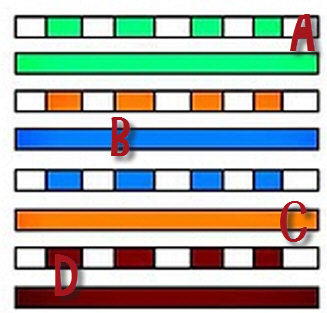 Image 1
|
|
|
29.
|
In EIA/TIA A which cable(s) transmit+
|
|
|
30.
|
In EIA/TIA A which cable(s) unused?
|
|
|
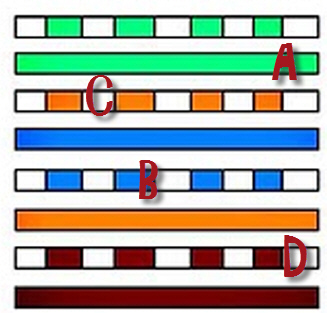 Image 2
|
|
|
31.
|
In EIA/TIA A which cable(s) receive+?
|
|
|
32.
|
In EIA/TIA A which cable(s) unused?
|
|
|
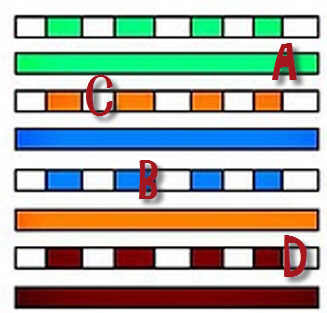 Image 3
|
|
|
33.
|
In EIA TIA B, which cable(s) unused?
|
|
|
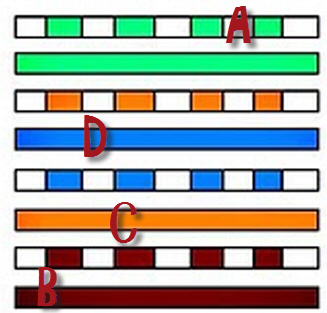 Image 4
|
|
|
34.
|
In EIA TIA B which cable(s) unused?
|
|
|
35.
|
In EIA TIA B which cable(s) receive+?
|
Completion
Complete each
statement.
|
|
|
36.
|
CSMA/CA is a collision ____ method of access.
|
|
|
37.
|
When installing UTP above a drop ceiling, you must use ____ rated cable.
|
|
|
38.
|
In a ____ based LAN computers must wait for a special frame before they can
transmit data .
|
|
|
39.
|
In UTP and STP cabling, these actually are used to reduce interference or
“crosstalk” between the cables.
|
|
|
40.
|
__________ wave forms are discreate states of on and off.
|
Matching
|
|
|
Wireless Networking a. | Radio | e. | 802.11g | b. | Microwave | f. | Infrared | c. | Satellite | g. | WAP | d. | 802.11b | h. | WEP |
|
|
|
41.
|
Transmits at 11Mbps
|
|
|
42.
|
Travels at 100Ghz to 1Ghz through the air
|
|
|
43.
|
Uses either broadcast or point to point and runs at 10-16Mbps
|
|
|
44.
|
Requires line of site and licensing approval
|
|
|
45.
|
A protected access protocol for Wi-Fi
|
|
|
46.
|
Transmits at 54Mbps or 108Mbps
|
|
|
47.
|
Very expensive! Most companies lease space from other companies.
|
|
|
48.
|
A better Wi-Fi protocol that is supposed to be the equivalent of wired
|