True/False
Indicate whether the
statement is true or false.
|
|
|
Lecture
|
|
|
1.
|
A WAN encompasses a limited geographical area.
|
|
|
2.
|
A network can be two computers that share a printer.
|
|
|
3.
|
A CAN covers a city and is often run by the city government.
|
|
|
4.
|
Protocols are little pieces of code that contain rules for communication.
|
Multiple Choice
Identify the
choice that best completes the statement or answers the question.
|
|
|
Lecture
|
|
|
5.
|
This type of network is appropriate for a company with no more than ten
computers where security is not an issue.
a. | Peer to peer | b. | Client/Server |
|
|
|
6.
|
This type of network is appropriate if there are more than 10 computers, or if
security is a requirement.
a. | Peer to peer | b. | Client/Server |
|
|
|
7.
|
This is defined as a group of computers with clients and at least one server
sharing resources.
a. | Network | c. | Peer to peer | b. | Transmission media | d. | Protocol |
|
|
|
8.
|
Which requires more training for users?
a. | Peer to peer | b. | Client/Server |
|
|
|
9.
|
Which allows for centralized management of resources?
a. | Peer to peer | b. | Client/Server |
|
|
|
10.
|
This is a collection of computers in a limited geographical area.
|
|
|
11.
|
This is the part of a network that can be cables, wires, wireless technology, or
NIC. They allow a client to attach to a network.
a. | Connectivity devices | c. | Protocols | b. | Transmission media | d. | Resources |
|
|
|
12.
|
This part of the network defines the "Rules" for
communication.
a. | Transmission media | c. | Protocols | b. | Connectivity devices | d. | Client |
|
|
|
13.
|
This is the part of a network that connects clients and servers together. It is
not the cables, but may be a hub, router, bridge, or brouter.
a. | Transmission media | c. | Protocols | b. | Connectivity devices | d. | Client |
|
|
|
14.
|
This part of a network allows a user to access a server and its resources. It is
the computer the user uses.
a. | Transmission media | c. | Client | b. | Connectivity devices | d. | Server |
|
|
|
15.
|
This is good when you have less than 10 comptuers in a network and you have
users who are trainable.
a. | Domain | c. | Workgroup | b. | Client-Server | d. | All of the
above |
|
|
|
16.
|
Use this when security is an issue.
a. | Domain | c. | Workgroup | b. | Peer-to-Peer | d. | All of the
above |
|
|
|
17.
|
Which of the following defines resources which could be shared?
a. | All of these | d. | bandwidth | b. | printer | e. | files | c. | hard drive
space |
|
|
|
18.
|
This would be a physical part of a network.
a. | Printer | c. | directories | b. | files | d. | protocols |
|
|
|
19.
|
This would be a logical part of a network.
a. | topology | c. | media | b. | printer | d. | hardware |
|
|
|
20.
|
If the transport layer adds information to the header of a packet, the ___ layer
will read and strip off that information.
a. | physical | c. | transport | b. | session | d. | application |
|
|
|
21.
|
The PICT, TIFF, MIDI, JPEG file formats are standards that the ____ layer can
translate on any computer.
a. | application | c. | transport | b. | presentation | d. | session |
|
|
|
22.
|
Sending and receiving computer can talk at the same time.
a. | full duplex | c. | simplex | b. | half duplex | d. | complex |
|
|
|
23.
|
Sending and receiving computer cannot talk at the same time. One has to talk and
then has to wait for the other to talk.
a. | full duplex | c. | simplex | b. | half duplex | d. | complex |
|
|
|
24.
|
Only one computer can talk. The other cannot reply.
a. | duplex | c. | simplex | b. | half duplex | d. | complex |
|
|
|
25.
|
The transport layer creates a ____ connection between the sending and receiving
computers.
|
|
|
26.
|
 Where is this drive located? a. | Inside your local computer | c. | On a server named
mulder | b. | On a server somewhere | d. | On a server named temp |
|
|
|
27.
|
 The UNC pathname for this drive would
be: a. | \\temp\mulder | d. | //temp/mulder | b. | \\mulder\temp | e. | //mulder/temp | c. | \\mulder\z |
|
|
|
28.
|
Jonesy McJones is trying to share a folder in Windows ME but for some reason
when he goes to folder properties, he can’t find anything related to share. How come?
a. | You cannot share folders on Windows ME | c. | He has not turned on file and print
sharing | b. | He needs to go to My Network Places properties | d. | He has to use the UNC
pathname |
|
|
|
29.
|
 The information above can be obtained by
typing a. | ipconfig | c. | winipcfg | b. | ipconfig /all | d. | winipcfg /all |
|
|
|
30.
|
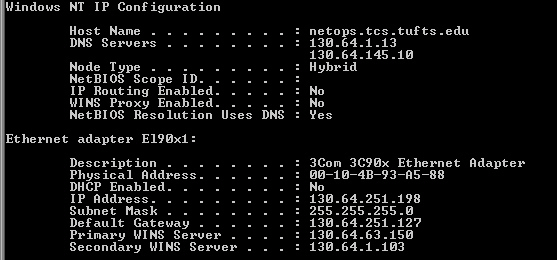 The information above can be obtained by
typing a. | ipconfig | c. | winipcfg | b. | ipconfig /all | d. | winipcfg /all |
|
|
|
31.
|
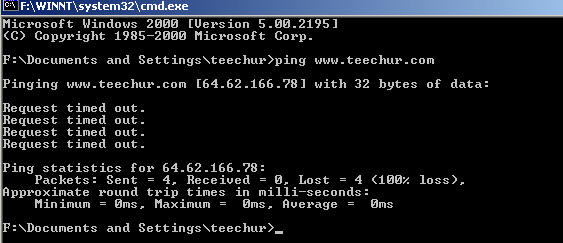 The prompt above may indicate that: a. | A server is down | c. | A server is using a firewall blocking ICMP
packets | b. | A NIC isn’t working | d. | Any of these |
|
|
|
32.
|
The following represents a: 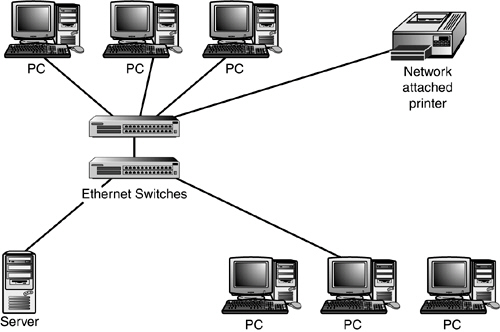
|
|
|
33.
|
The following represents a: 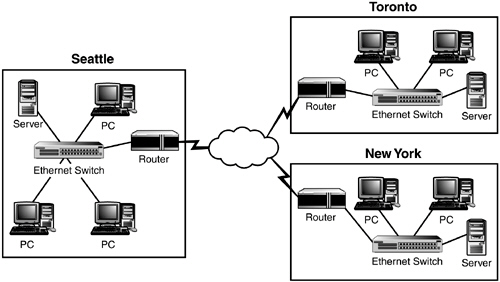
|
Completion
Complete each
statement.
|
|
|
34.
|
A __________ is a large network that is generally slower than a LAN and covers a
large geographical area.
|
|
|
35.
|
This connects computers from around the world into one large network.
|
|
|
36.
|
A peer to peer network can also be known as a _______.
|
|
|
37.
|
The ___________ layer defines the cabling and NICs used on a network
|
|
|
38.
|
The __________ layer acts as a liaison between the user and the network by
allowing the user to use a program (such as email) to create data to be sent on the network.
|
|
|
39.
|
The ______________ layer is made up of two
sublayers.
|
|
|
40.
|
The ___________ sublayer establishes and maintains links between communicating
devices.
|
|
|
41.
|
The error and flow control at the data-link layer are not as robust as at the
_______ layer.
|
|
|
42.
|
This is a group of computers connected together for the purpose of sharing
resources.
|
|
|
43.
|
In a client/server network, the role of the ____ is to request services from the
server.
|
|
|
44.
|
A network with a mainframe and dumb terminals is a _____ network.
|
|
|
45.
|
A network where the processing power is shared among servers and clients is a
_____ network.
|
Matching
|
|
|
Match the parts of a network with their definitions.
a. | Protocol | e. | Server | b. | Transmission Media | f. | Clients | c. | Resources | g. | Network operating system | d. | Connectivity
devices |
|
|
|
46.
|
Software that allows a server to perform network operations.
|
|
|
47.
|
These can be files or directories or peripherals like printers, scanners, or
plotters
|
|
|
48.
|
A set of "rules" that allow communication to take place.
|
|
|
49.
|
Computers that access servers across a network and use resources.
|
|
|
50.
|
Can include NICs, cabling, wires, connectors, or wireless technology
|
|
|
51.
|
The computer(s) on a network that manage the network and resources.
|
|
|
52.
|
Hardware such as hubs, routers, brouters, or gateways that connect computers
together.
|
|
|
Match the level of the OSI model with the descriptions below. a. | Application | e. | Network | b. | Presentation | f. | Data Link | c. | Session | g. | Physical | d. | Transport | h. | More than one
level |
|
|
|
53.
|
Describes the physical cabling and NICs.
|
|
|
54.
|
Interfaces with programs on the computer.
|
|
|
55.
|
Repeater and hubs
|
|
|
56.
|
Does not add or strip a header
|
|
|
57.
|
Primary function is to disassemble frames into bits for transmissions
|
|
|
58.
|
Deals with addressing on the MAC sublayer (aka the physical device address, or
the address of the NIC)
|
|
|
59.
|
Ensures reliable delivery of messages through error control and end to end flow
control
|
|
|
60.
|
Bridge
|
|
|
61.
|
Delivers packets through circuit switching or packet switching,
|
|
|
62.
|
gateway
|
|
|
63.
|
Opens, maintains, and closes a communication session
|
|
|
64.
|
router, brouter
|
|
|
65.
|
Advertises available services on the networ
|
|
|
Parts of a Network 
|
|
|
66.
|
Protocols
|
|
|
67.
|
Resource to share
|
|
|
68.
|
Transmission media
|
|
|
69.
|
Clients
|
|
|
70.
|
Networking hardware
|
|
|
71.
|
Server
|
|
|
Match the description to the 802 committee where you would go for
information. a. | Setting up a wireless network | h. | General networking
standards | b. | Creating new hardware for an ethernet network that uses the CSMA/CD access
method | i. | Looking for
information on an older token based LAN that doesn’t use a ring topology | c. | Developing new token
ring technologies | j. | Your
company wants to move the phone system from POTS to integrating it into the ethernet
network | d. | Learning about new network security options available | k. | Learning about broadband | e. | Reading up on the
purpose of the LLC layer | l. | Designing new hardware to work with the cable system | f. | Developing hardware
to take advantage of fiber optics | m. | Defines protocols for setting up a high speed demand priority LAN | g. | Protocols in use on
a MAN |
|
|
|
72.
|
802.1
|
|
|
73.
|
802.2
|
|
|
74.
|
802.3
|
|
|
75.
|
802.4
|
|
|
76.
|
802.5
|
|
|
77.
|
802.6
|
|
|
78.
|
802.7
|
|
|
79.
|
802.8
|
|
|
80.
|
802.9
|
|
|
81.
|
802.10
|
|
|
82.
|
802.11
|
|
|
83.
|
802.12
|
|
|
84.
|
802.14
|